Saturday, December 17, 2005

Hawaiian Bobtail Squid Glows from Below

The Hawaiian bobtail squid beams light from its belly to camouflage its dark shadow from predatory fish on the sea floor, and now scientists know how. The Hawaiian Bobtail, similar to those found in Timor, is about two inches long and swims in shallow waters around Hawaii. It searches for and feeds on shrimp at night, when moonlight would cast the squid’s shadow on the sea floor below and alert fish that might eat the squid. You or I probably could not see the squid’s beam of belly light with the naked eye. The researchers use specialized instruments in the lab to measure the squid’s glow.

Researchers have discovered that the squid has developed specialized proteins in its belly that reflect light given off by luminescent bacteria that live on the squid. The reflected light camouflages the squid’s shadow, and the squid is effectively masked in its own moonlight glow. The new proteins, which the researchers dubbed “reflectins,” are found in a special organ in the squid’s belly called the light organ reflector. In addition, similar proteins are found around the squid’s eyes and could help the squid see its food.

Crookes, W. J. et al. Reflectins: The Unusual Proteins of Squid Reflective Tissues. Science 303, 235-238 (January 9, 2004).

Friday, December 16, 2005

Bornellidae


Despite the fact that I didn't make it for the Pier Dive yesterday, I decided to post a few shots of a nudibranch I photographed there a few months ago. I believe it is some species of Bornellidae, perhaps Bornella stellifer. This individual was about 8-9cm and found at 6M. Posted by Picasa

Bornellidae 2


Notice the series of appendages along the Bornella's back that protect its gills.

Wednesday, December 14, 2005

Pier Dive Thursday

The Pier's there all the time, but Thursday morning only comes once a week.
Morning Dive on Thursday. Meet at Pier at 5:30am.

Tuesday, December 13, 2005

Puffer


Yet a few more shots from Sunday's dive in Maubara.
Notice the four teeth and textured skin of this puffer.

Cleaner Shrimp


... Posted by Picasa

Monday, December 12, 2005

Juvenile File Fish


From Sunday's dive in Maubara. Lendell spotting this tiny Juvenile File Fish hiding out in a crinoid. Posted by Picasa

Sunday, December 11, 2005

Maubara - Sunday Dives

Thanks to Kurt, Niny, Lendell, and Diane for a magnificient day at Maubara Beach. Once again, conditions were spectacular with visability reaching 25M. The dive at Maubara is a gradual slope of reef outcroppings and sandy patches, and the whole area is teaming with sealife. The photos below are just a few of the cool creatures encountered today.

Shear Zones


This nudibranch is a Berthella martensi. According to Debelius, this species can shed its mantle or "shear zones" as an escape mechanism. Posted by Picasa

Durban Hinge-beak Shrimp


This barrel sponge at 20M was teaming with dozens of Rhynchocinetes durbanensis.

Pseudobiceros bedfordi


Closeup of the folds at the head of a Pseudobiceros bedfordi Posted by Picasa

Saturday, December 10, 2005

Saturday at Sandy Bottom and Sunday Diving

Lendell, Diane and I treated ourselves to an afternoon dive at Sandy Bottom today. Conditions could not have been better...very little current and terrific visability.

SUNDAY DIVING

Heading West on Sunday. First dive at Maubara by the church and then we will hit Sandy Bottom on the way back in the afternoon. Maubara has a lovely stone beach and even if you don't dive it's a shady spot to relax on a lazy Sunday. We are meeting at our house at 9:00am.

Reef Crab


Reef Crab (2cm). Just at the entrance to SB in only 3M. Posted by Picasa

Chelidonura tsurugensis


Perhaps Chelidonura tsurugensis. Posted by Picasa

Swimmer Crab


Swimmer crab Posted by Picasa

Big Crab


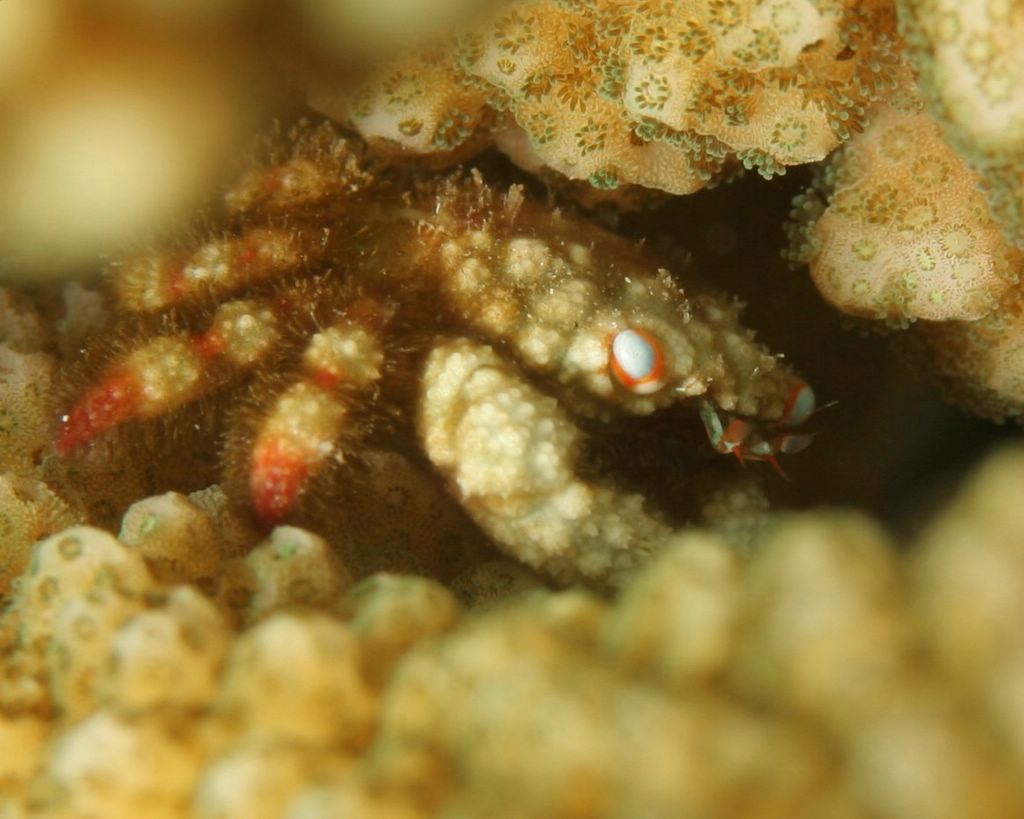
This beautiful crab (15-20cm) was hanging out under the log just at the top of the slope in about 7M of water. Posted by Picasa

Phyllodesmium ??


We think this nudibranch is in the genus Phyllodesmium but not really sure. It was difficult to discern rhinophores from other appendages. Posted by Picasa

Friday, December 09, 2005

Whip Coral Partner Shrimp


... There are at least two types of whip coral partner shrimps, including this Pontonides unciger. It's usually found in pairs on "black coral" of the genus Cirripathes.

Thursday, December 08, 2005

Immaculate Diving

Shane, Diane and I enjoyed the holiday by diving K57 and the East Side of Bob's Rock. K57 was good in spite of the threat of run-off from the Manatuto River, but Bob's Rock was a bit clearer. The highlights of the day for me were several Xeno Crabs found at about 20M at Bob's.

White Xeno Crab


Xeno crabs are also 'decorators'. This white xeno crab has attached pieces from the commensal whip coral to its nose and head. Posted by Picasa